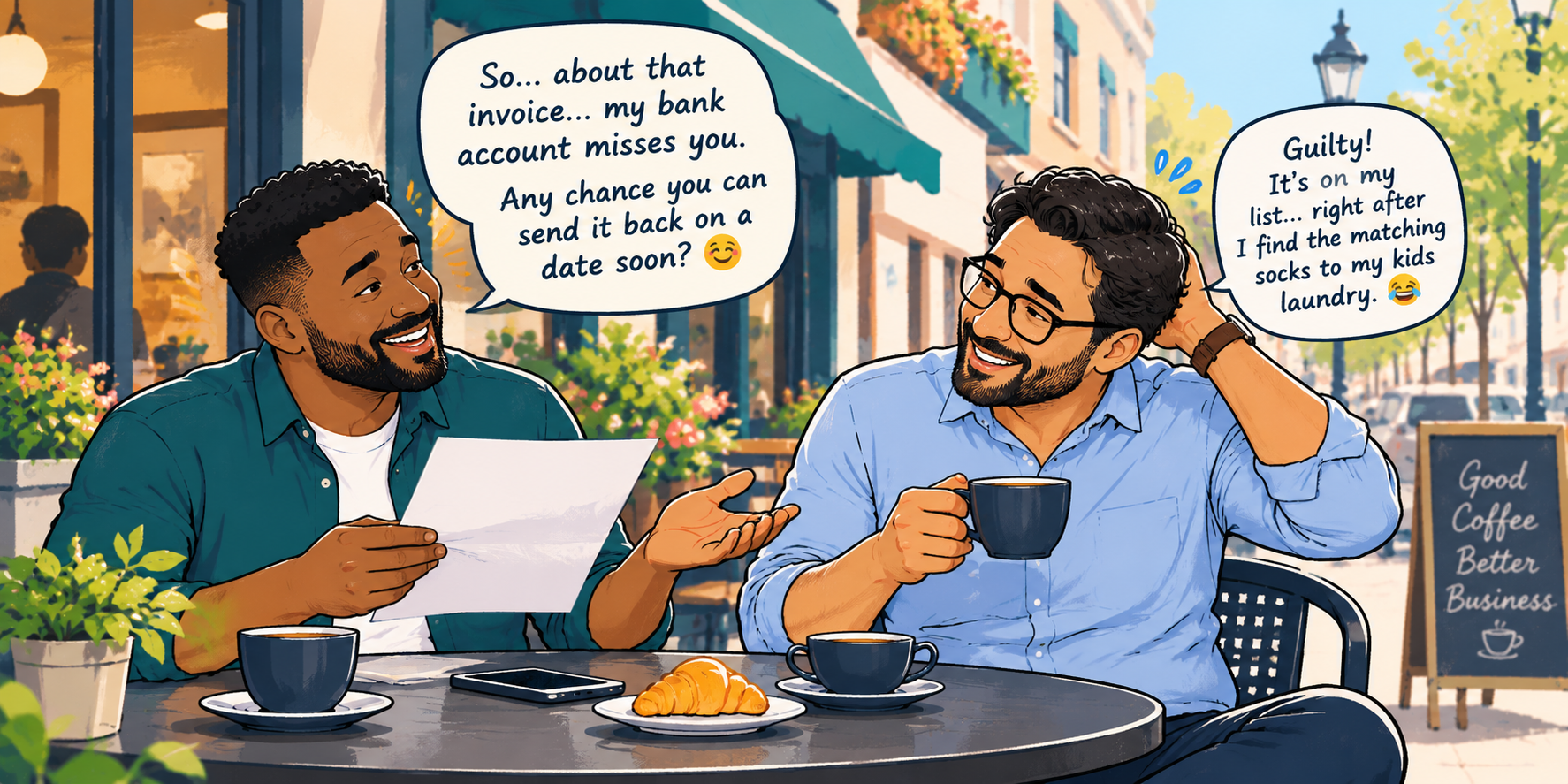
You did the work. The client was happy. You sent the invoice.
And then… silence.
The due date came and went. You checked your bank account. Nothing. You checked your email. Still nothing.
Now you're stuck with an uncomfortable question: How do I ask for my money without sounding rude?
Maybe it's a client you've worked with for years. Maybe it's someone who promised more projects. Or maybe you simply hate discussing money.
Here's the good news: following up on an unpaid invoice doesn't have to turn into a confrontation.
You can be friendly without being vague, understanding without being a pushover, and professional without sounding like a debt collector.
The key is knowing when to follow up, what to say, and when to stop waiting for things to resolve themselves.
First, You're Not Being Rude by Asking to Be Paid
This is worth saying upfront.
If you've delivered what was agreed and the invoice is legitimately due, following up is a normal part of running a business.
You aren't asking for a favour. You're following up on a payment obligation.
Yet many small-business owners hesitate because they worry about appearing impatient or damaging a relationship.
The problem is that waiting indefinitely can damage something else: your business's cash flow.
You may still have rent, suppliers, software bills, contractors, and employees to pay while you're waiting for your customer's money.
That doesn't mean you should send an angry email the morning after a missed payment.
It means you need a professional approach that protects both your finances and your client relationships.
Before You Follow Up, Check These Five Things
Sometimes an unpaid invoice isn't the result of a customer deliberately withholding money.
Before sending your first reminder, take a few minutes to check the details.
1. Has the Due Date Actually Passed?
Review the agreed payment terms.
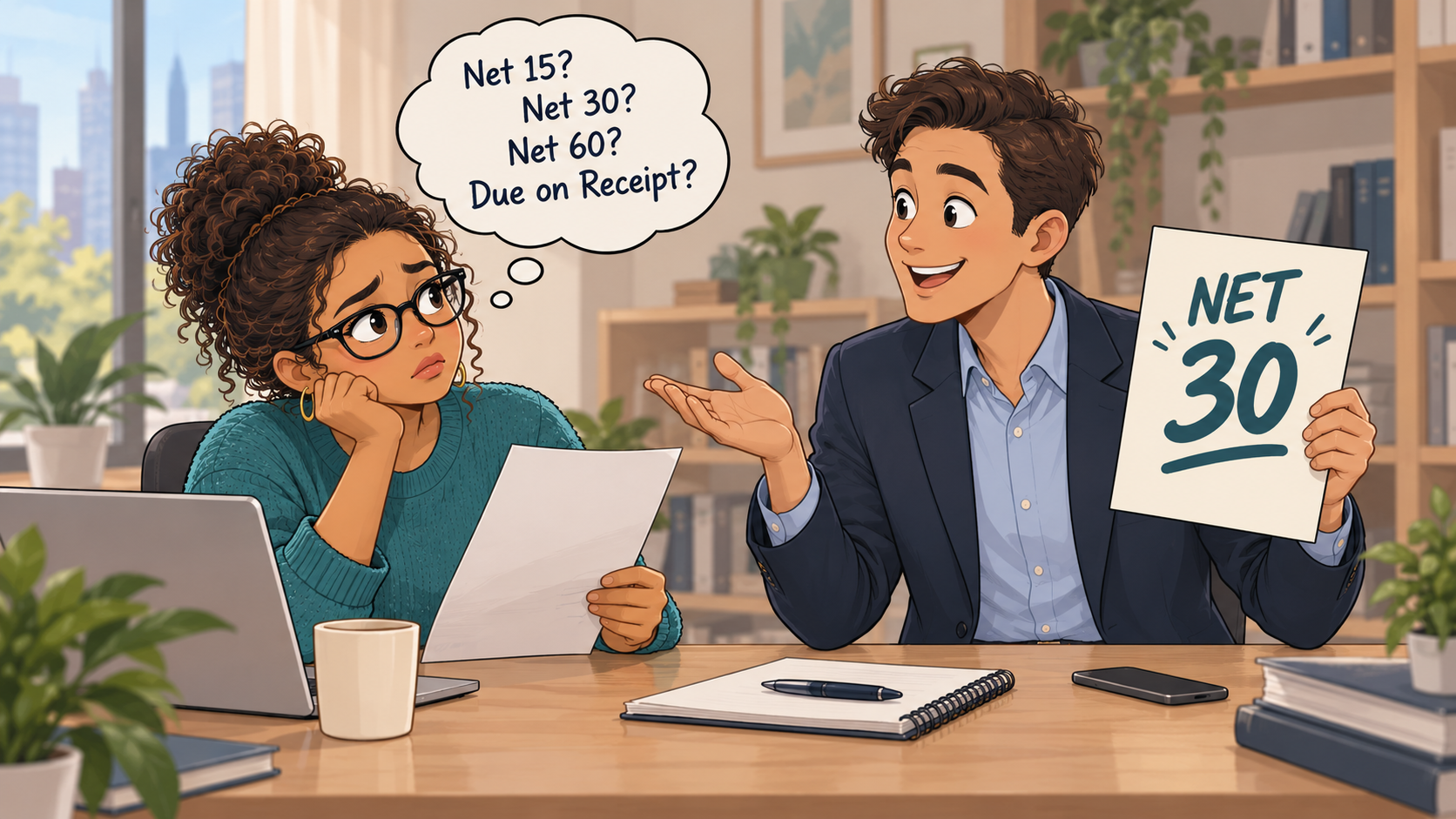
If your invoice says Net 30, confirm when the 30-day period begins according to your agreement.
Don't assume the due date is 30 days after the work was completed if the contract says it starts when the customer receives an approved invoice.
Clear invoice payment terms make these conversations much easier.
2. Did the Invoice Reach the Right Person?
Your client may have approved the work, but another person or department may be responsible for processing the payment.
Check that you sent the invoice to the correct address and included any required purchase order number or reference.
3. Has the Customer Already Paid?
Check your payment records before sending a reminder.
A transfer may have arrived under an unfamiliar name, a payment may still be processing, or someone on your team may have recorded it elsewhere.
Few things make a payment reminder more awkward than asking for money you already received.
4. Is the Amount Correct?
Check the invoice total, any adjustments, previously received deposits, credits, and partial payments.
A customer may be withholding payment because they disagree with the amount or need an error corrected.
5. Has the Customer Raised a Concern?
Look through your recent messages.
If the customer has disputed part of the work or requested clarification, address that concern rather than continuing to send generic payment reminders.
When Should You Follow Up on an Unpaid Invoice?
You don't need to wait several weeks before sending the first reminder.
A simple follow-up schedule can help you stay consistent without overwhelming the customer.
| Timing | Suggested action | Tone |
|---|---|---|
| 3–5 days before the due date | Optional courtesy reminder | Helpful |
| 1–3 days after the due date | First overdue reminder | Friendly |
| About 7–10 days overdue | Second reminder or personal call | Direct but polite |
| Around 2–4 weeks overdue | Firmer follow-up and request for a definite payment date | Professional and clear |
| Continued non-payment | Consider a formal notice or other appropriate next steps | Firm and factual |
These are suggested intervals, not mandatory legal deadlines. Your contract, customer relationship, invoice amount, and applicable laws may require a different approach.
A Realistic Example
Imagine a freelance consultant sends a $1,250 invoice on February 9, 2026, with payment due March 11, 2026.
The customer doesn't pay.
The consultant could follow this schedule:
March 13: Send a friendly overdue reminder.
March 20: Follow up again and request a payment update.
April 13: If the matter remains unresolved, send a firmer message asking for payment by a specified date or a written explanation of any outstanding issue.
This gives the customer several reasonable opportunities to resolve the situation while keeping a clear record of the communications.
Three Payment Reminder Emails You Can Actually Use
You don't need a long letter for every overdue invoice.
In many cases, a short email with the right information is more effective than several paragraphs explaining why the payment matters to you.
Here are three examples you can adapt.
Email 1: The Friendly Nudge
When to use it: A day or two after the payment deadline.
Subject: Invoice INV-0264 — Payment Follow-Up
Hi Alex,
I'm following up on invoice INV-0264 for $1,250, which was due on March 11, 2026.
I wanted to check whether you've had a chance to process the payment.
I've attached the invoice again for convenience. You can use the payment instructions included there.
If you've already sent payment, please disregard this reminder. Otherwise, please let me know if you need anything from me.
Best,
Jordan
This message is friendly without assuming the customer has done something wrong.
It also gives them the invoice details and an easy opportunity to respond.
Email 2: The Polite but Clear Follow-Up
When to use it: The invoice is still unpaid and the first reminder hasn't resolved the issue.
Subject: Follow-Up Required — Invoice INV-0264
Hi Alex,
I'm following up again regarding invoice INV-0264 for $1,250, originally due March 11, 2026.
The payment is still outstanding according to my records.
Could you please confirm when I should expect payment? I've attached the invoice for reference.
If there's a question or issue preventing payment, please let me know so we can resolve it.
Best,
Jordan
Notice the difference.
The first email checks in. The second asks for a specific response.
You're still being respectful, but you're no longer leaving the conversation open-ended.
Email 3: The Firmer Reminder
When to use it: Previous reminders have gone unanswered or an agreed payment date has been missed.
Subject: Payment Update Requested — Invoice INV-0264
Hi Alex,
I'm writing regarding the outstanding balance of $1,250 on invoice INV-0264, which was due March 11, 2026.
I've followed up previously, but I haven't received payment or confirmation of a payment date.
Please arrange payment by April 17, 2026, or contact me before then to discuss any issue preventing settlement.
I'd like to resolve this promptly and maintain our positive working relationship.
Best,
Jordan
The third message establishes a clear expectation without making threats.
If further action becomes necessary, it should be considered separately and based on the contract, the circumstances, and applicable law.
Should You Call the Client Instead of Sending Another Email?
Sometimes, yes.
If two emails haven't received a response, another identical email may not accomplish much.
A short phone call can reveal problems you didn't know existed.
Perhaps the invoice is sitting with the wrong department.
Perhaps the client needs another document.
Or perhaps they're experiencing financial difficulties and don't know how to tell you.
A calm conversation can help you understand what's actually happening.
You might say:
“I'm calling about invoice INV-0264, which is still showing as unpaid. I wanted to check whether there's anything holding up the payment and when we might expect it.”
Then listen.
Don't immediately jump into an argument or assume dishonesty.
If the client promises to pay on a specific date, send a brief written confirmation afterward.
That way, both parties have a record of what was discussed.
What If the Client Says They Can't Pay Right Now?
This is where being understanding and protecting your business need to work together.
A customer may genuinely be struggling with cash flow.
If the relationship is valuable and the circumstances justify it, you could consider an alternative payment arrangement.
For example, a customer owing $1,200 might agree to pay:
| Payment | Amount |
|---|---|
| First instalment | $400 |
| Second instalment | $400 |
| Final instalment | $400 |
| Total | $1,200 |
The amounts and dates should be agreed upon clearly and documented in writing.
Before accepting a payment plan, consider whether the arrangement is realistic and how the delayed payments affect your own cash flow.
A payment plan can be useful, but it isn't automatically the best choice for every situation.
What Should a Payment Arrangement Include?
At a minimum, confirm the outstanding amount, agreed payment dates, instalment amounts, payment method, and how missed instalments will be handled.
Also clarify whether the arrangement changes any other part of the original agreement.
You don't need to make the conversation hostile. You do need to make the outcome clear.
What If the Client Disputes the Invoice?
A disputed invoice requires a different approach from one the customer simply forgot to pay.
If the customer challenges the amount, work performed, or contractual terms, investigate the issue.
Review:
The original agreement
The scope of work or order
Delivery or completion records
Any approved changes
Previous payments or credits
Relevant communications
If your invoice contains an error, correct it and explain the adjustment.
If the customer disputes only part of the invoice, consider whether the undisputed amount can be paid while the remainder is reviewed, consistent with the agreement.
Avoid repeatedly demanding the full amount without acknowledging a legitimate dispute.
Preserving a client relationship doesn't mean agreeing with every complaint. It means giving genuine concerns a fair review and responding professionally.
When Is It Time to Stop Being So Patient?
A friendly reminder is a good starting point.
It isn't an obligation to wait forever.
You may need to reconsider your approach when a customer repeatedly ignores messages, breaks payment promises, or continues ordering work while substantial earlier invoices remain unpaid.
Depending on the agreement and applicable law, possible next steps may include:
Sending a formal written payment demand
Reviewing whether future work should be paused
Requesting payment upfront for new projects
Seeking professional legal advice
Considering a legitimate debt collection process
The appropriate option depends on the invoice amount, the circumstances, and the laws governing the transaction.
What About Late Payment Fees?
Late fees or interest should not be invented after the customer has missed a deadline.
Check whether they were properly agreed, whether applicable law permits them, and how any interest or charges must be calculated and disclosed.
For significant or disputed amounts, professional legal advice may be appropriate.
Should You Threaten Legal Action?
Avoid making threats simply to pressure a customer.
If you're genuinely considering legal action, first assess the contract, evidence, recoverability, cost, deadlines, and applicable procedures.
Sometimes a negotiated solution is more economical than a lengthy dispute.
How to Prevent More Unpaid Invoices in the Future
Following up is important. Preventing unnecessary delays is even better.
Agree on Payment Terms Before Starting Work
Don't wait until an invoice is overdue to find out that you and the client had different expectations.
Confirm the price, payment terms, due-date calculation, and any deposit or milestone arrangements in advance.
Invoice Promptly
If the work has been completed and your agreement allows you to invoice, don't unnecessarily delay sending it.
A late invoice can lead to a late payment.
Make Paying Easy
Include the invoice number, total amount due, actual due date, and clear payment instructions.
Where practical, offer convenient payment options.
Confirm Billing Requirements Early
Larger organizations may have purchasing procedures, supplier portals, or specific invoice submission requirements.
Ask about these before the first invoice is issued.
Keep an Eye on Outstanding Invoices
A simple tracking system can show:
| Invoice status | What it means |
|---|---|
| Sent | Invoice delivered; not yet paid |
| Due soon | Payment deadline approaching |
| Overdue | Payment deadline passed; balance remains |
| Partially paid | Some payment received; balance remains |
| Paid | Full payment recorded |
| Disputed | Customer has raised an issue requiring review |
Some systems also provide an accounts receivable aging report, which groups unpaid balances by how long they've been outstanding.
Reviewing these balances regularly helps you act before a forgotten invoice becomes a long-standing problem.
Adjust Future Terms When Necessary
If a customer consistently pays late, it may be appropriate to renegotiate shorter payment terms, request a deposit, or change how future projects are billed.
Do this transparently and in line with existing contractual obligations.
The Best Reminder Is the One You Actually Send
Nobody starts a business because they love chasing invoices.
But getting paid is part of keeping the business running.
You don't need an aggressive tone. You don't need to write a dramatic letter. And you certainly don't need to apologize for asking a customer to honour an agreed payment deadline.
Start with the facts. Send a friendly reminder. Follow up consistently. Listen when there's a genuine issue. Become firmer when necessary.
And remember that protecting a business relationship should never mean abandoning your right to pursue legitimate payment.
Be polite. Be clear. Be consistent. Your work deserves to be paid for.
Sources & References
- How to Speed Up Invoicing to Improve Cash Flow · Business Development Bank of Canada (BDC)Accessed 2026-04-02
- Tips for Writing a Great Invoice Email · StripeAccessed 2026-04-03
- Solving Cash Flow Problems for Small Businesses · American ExpressAccessed 2026-04-03